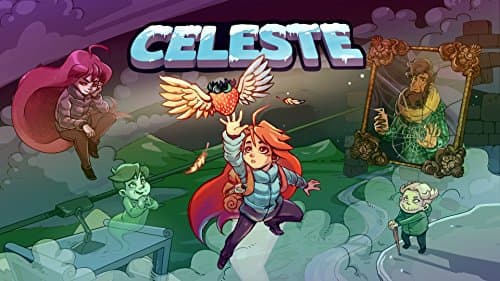
Celeste has an awkward reputation for a budget buyer: universally acclaimed, permanently recommended, and also short and famously difficult. So the honest question is not "is it good" — it is "is eight to twelve hours of a hard platformer worth twenty dollars to you?" For a large majority of people the answer is yes, and the reason is not the length.
Below is the pick with its live, date-stamped price, then a straight review: what you are buying, the value case, who it is perfect for, and who should skip it. Celeste also anchors our cheap platformers list; for the head-to-head, see Cuphead vs Celeste.
The honest review
What you're actually buying
Celeste is a precision platformer: single-screen challenges you retry until you nail them, strung along a mountain you are climbing for reasons the story unpacks as you go. The main climb runs roughly eight to twelve hours. Behind it sit B-side and C-side remix levels and a full extra chapter, which push a completionist run far past twenty hours — and which are genuinely brutal.
The value case
Two things justify the price. First, the design: this is one of the most precisely built platformers ever released, where every death is your fault and every retry takes two seconds, which is why the difficulty feels fair instead of cheap. Second, the writing. Celeste tells a plain, direct story about anxiety and self-doubt that lands harder than most games at any price. You are not paying for hours here; you are paying for craft density, and it is extremely dense.
The assist mode changes the calculation
This is the part budget buyers miss. Celeste ships with an assist mode that lets you slow the game down, add air dashes, or make yourself invincible, with no penalty and no lockouts. That means the difficulty is genuinely optional: if you want the story and the mountain without the wall, you can have exactly that. Very few hard games hand you that switch, and it widens who this is worth buying for enormously.
Who it's perfect for
Anyone who likes tight, skill-based games and the loop of failing until it clicks. Anyone who wants a complete, meaningful story in a weekend rather than a sixty-hour commitment. Handheld players especially — single-screen challenges are ideal for short sessions, which is why it appears on our Switch games under $30 list.
Who should skip it
If reflex platforming actively frustrates you, assist mode helps but does not change the core loop: jump, die, retry. If you want a big open world, a long adventure, or something to relax into after work, this is the wrong twenty dollars — look at cheap cozy games instead. And if you only care about hours-per-dollar as a raw number, longer games at this price exist; they are just not this good.
The value verdict
Worth it for most people, and an easy recommendation at its usual sale price. It is one of the few short games we consider genuinely good value, because almost nothing in it is filler. Buy it if you want a superb, complete, hand-made game; skip it if precision platforming is a chore you already know you dislike.