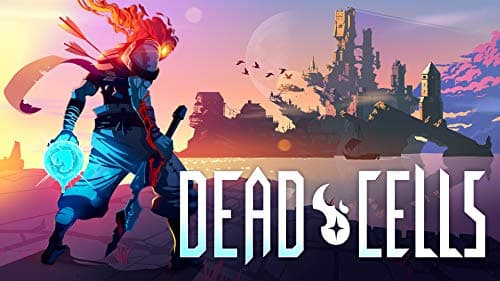
Dead Cells has a value story most games cannot match: it launched in 2018 and its developers kept adding to it for years afterwards, much of it free. So the question is not whether the game is good — it is whether a run-based game you will lose over and over is worth twenty-five dollars to you. That depends almost entirely on one thing, and it is not skill.
Below is the pick with its live, date-stamped price, then a straight review: what you are buying, the value case, who it suits, and who should skip it. Dead Cells also anchors our cheap action games list; for head-to-heads, see Hollow Knight vs Dead Cells and Dead Cells vs Cult of the Lamb.
The honest review
What you're actually buying
A roguelite with metroidvania bones. You fight through a run of connected, partly randomized areas, collecting weapons and mutations as you go. When you die — and you will — you lose the run and start again, keeping a small amount of permanent progress that unlocks new gear into the pool for next time. Combat is fast, precise and genuinely excellent; the moment-to-moment feel is the reason this game has the reputation it does.
The value case
Two things justify the price. The first is longevity by design: a single successful run takes well under an hour, but reaching the point where you can complete one takes many hours, and the game then layers on escalating difficulty tiers that reshape the whole thing again. Fifty hours is a normal figure here, not an outlier.
The second is the update history. Motion Twin and Evil Empire spent years adding content, much of it free — new biomes, new weapons, new bosses. You are buying a 2018 game that has been repeatedly enlarged since, which is the opposite of the usual budget-tier trade-off where a cheap game is a small one.
The thing that decides it for you
Ask yourself how you feel about losing progress. Dead Cells is not hard in the way a precision platformer is hard; it is hard in the way a slot machine is hard, in that a great run can end because you got a poor weapon pool and a bad room. If that reads as "exciting" to you, this is a fifty-hour game for twenty-five dollars. If it reads as "infuriating", no amount of quality in the combat will fix it, and you should buy something with a save file instead.
Who it's perfect for
Anyone who likes tight, reactive combat and short sessions. It is one of the best handheld games ever made for exactly that reason — a run fits into a commute, and there is no story thread to lose track of between sessions. It is also excellent for players who want mastery rather than narrative: the skill ceiling is very high and the game keeps raising it.
Who should skip it
If you want a story, look elsewhere — there is lore, but this is not a game with a plot you follow. If you want steady forward progress rather than repetition, or if losing an hour of work to one mistake is going to ruin your evening, the loop will grate. In both cases Hollow Knightis the better twenty-something dollars — same genre lineage, permanent progress, an actual world to explore.
The value verdict
Worth it, comfortably, for anyone who enjoys run-based games. The combat is best-in-class, the content-per-dollar is unusually high because of the years of updates, and it holds up indefinitely in short sessions. Skip it only if repetition and lost progress are things you already know you dislike.