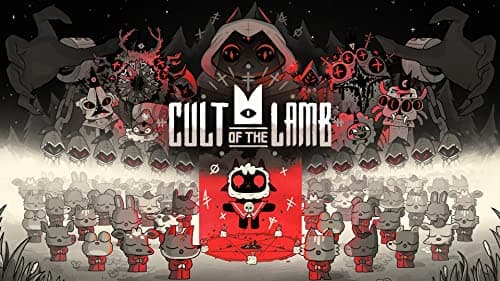
Cult of the Lamb sells itself on a joke that lands immediately — you are a cute lamb running a doomsday cult — and the risk with a game like that is always that the joke is the whole product. It is not, but the honest answer is more complicated than the reviews suggest, because this is two games stitched together and one of them is considerably better than the other.
Below is the pick with its live, date-stamped price, then a straight review of both halves. It also appears on our cheap cozy games list, which is a slightly funny place for a game about human sacrifice; for the head-to-head, see Dead Cells vs Cult of the Lamb.
The honest review
What you're actually buying
Two interlocking loops. In the first you go on short roguelite dungeon runs — fight through randomized rooms with a weapon and a curse you did not choose, and either clear the area or die and lose the run. In the second you come home to a village of followers you have to feed, house, indoctrinate and keep from losing faith. Progress in each half feeds the other: resources from runs build the settlement, and a happy settlement makes runs easier.
The management half is the good half
The cult sim is where the game is genuinely distinctive. Your followers have names and moods, they get old and ill, they gossip and dissent, and the rituals you use to keep them in line are the source of nearly all the game's best comedy. Watching a village you built go through a crisis of faith because you skipped a sermon is a specific pleasure very few games offer.
The combat half is competent, not special
This is the honest caveat that most enthusiastic recommendations skip. The dungeon runs are fine — readable, fast, reasonably varied — but they are shallow next to a dedicated roguelite. Weapons feel similar to each other, and by the mid-game the runs can start to feel like the tax you pay to get back to the village. If you are coming to this primarily as a roguelite fan, Dead Cells is the substantially deeper combat game at the same price.
The value case
Fifteen to twenty hours to reach the credits, with a good deal more available if the management loop grabs you — and it does grab a lot of people. The developers have also added substantial free updates since launch, including new content and modes, so the version you buy today is materially larger than the one that shipped. For a twenty-five dollar game with a genuinely original central idea and a distinctive art style, that is solid rather than spectacular value.
Who it's perfect for
People who like management and base-building games and want something with more personality than the genre usually offers. It is also an excellent handheld game — runs are short, village chores are bite-sized, and the loop suits twenty-minute sessions. And it is genuinely funny, which is rarer than it should be.
Who should skip it
Skip it if you want a serious action game — the combat will not sustain you. Skip it if management sims bore you, because that half is the reason to be here and there is no way to opt out of it. And if the art style is the main draw, be aware the tone is much darker than the character designs suggest.
The value verdict
Worth it if the cult-management idea appeals to you — that half is original, well executed and very funny, and the free post-launch content has made it a bigger game than it launched as. Not worth it if you are buying it as a roguelite first; the combat is the weaker half and better games exist at the same price.