Mostly no, and the exceptions are not where you expect. Nintendo states plainly that "Nintendo Switch game cards are not region locked", so an imported card plays on your console. What is locked is everything with money attached: your account's country, the storefront it can see, and the gift cards and voucher codes it will accept. PlayStation is blunt about the first of those — "Once created, your country/region can't be changed."
That distinction is the whole of this page, and getting it wrong is one of the few genuinely unrecoverable mistakes a budget buyer can make. A disc bought from the wrong country is usually fine. Twenty dollars of store credit bought for the wrong country is gone.
What each platform holder actually says
Nintendo: cards are region free, with one exception.Nintendo's regional compatibility FAQ says game cards are not region locked, and names the exception: "consoles and games distributed in the Chinese region are not compatible with consoles and games distributed in the Americas". So a European or Japanese Switch card will run on a US console. The language on the box may not be the one you wanted — that is a separate problem, and one worth checking before importing an RPG.
Nintendo: the eShop follows your account, not your console."The Nintendo eShop country on Nintendo Switch will be determined by the country settings in your Nintendo Account." You can change that setting, but Nintendo warns that "your Nintendo eShop account balance does not carry over" when you do. Translation: spend your balance before you move, or lose it.
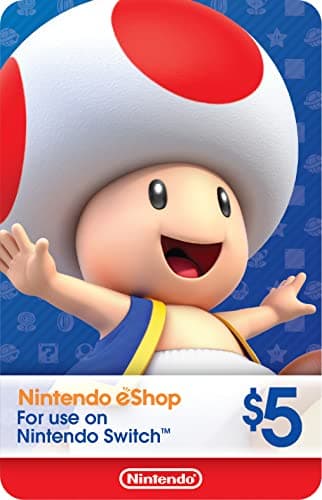
Nintendo: eShop cards only work in their own region.This is the expensive one. "Nintendo eShop cards are compatible only for the Nintendo eShop country or region where they were intended to be sold," and if you buy one for the wrong region, Nintendo states that "we cannot replace it, exchange it, or offer a refund."
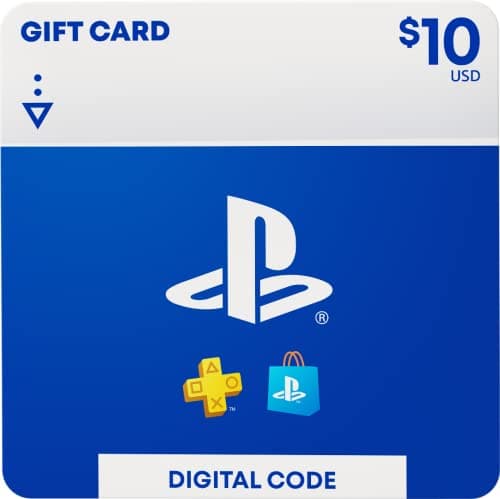
PlayStation: the account country is permanent.PlayStation's support page is unusually direct: "Once created, your country/region can't be changed," and "You can't change your account's country/region after your account has been created." It adds that "Voucher codes and your account's country/region must match to be activated successfully." So a PSN card from the wrong country will not redeem, and unlike the Nintendo case there is not even a one-time migration available to you.
Subscription codes follow the same rule. Nintendo notes that Switch Online membership codes bought for the Americas can be redeemed on accounts set to Americas countries where the eShop is available, and that codes for other regions need accounts set to those regions. The pattern is consistent across every platform: media travels, money does not.
Why this matters more than it used to
Because the cheap end of gaming has moved toward codes. The things a budget buyer reaches for — store credit to catch an eShop-only sale price, a top-up to buy something that has no disc, a cheap subscription code from a marketplace seller — are exactly the things that are region-bound and non-refundable. A gray-market listing promising a suspiciously cheap gift card is usually a region mismatch waiting to happen, on top of everything else wrong with that market; are gray-market game keys safe is the longer version of that warning.
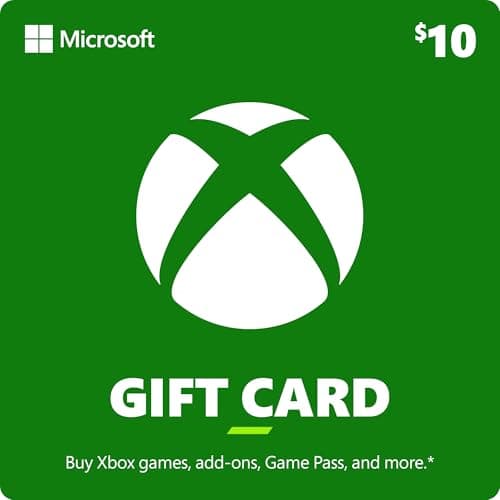
The three picks below are the boring, correct answer: official store credit for the region you actually live in. They are not exciting purchases. They are the ones that work.
The practical rules
Buy credit for the account, not for the console
The console is irrelevant to the transaction. What matters is the country on the account that will redeem the code. Check that before you buy, especially when buying as a gift — a US eShop card is useless to a relative whose Nintendo Account is set to Canada, and Nintendo will not exchange it. If you are gift-shopping, our gifts for Nintendo Switch owners page is written around that problem.
Set a new account's country correctly the first time
On PlayStation there is no second chance: the country is fixed at creation and the support page says so twice. If you are setting up a console for someone, do this bit slowly. Moving country later means a new account, which means a new library.
Importing a disc or card is usually fine; importing a download is not
Physical media is the region-free part of modern gaming. If a Japanese or European edition of a game is genuinely cheaper and you are comfortable with the packaging language, a card or disc will generally work. A download code for that same game will generally not, because the code is tied to a storefront and the storefront is tied to your account country. That asymmetry is one more quiet argument in the physical vs digital column.
Watch for the language and the rating, not just the region
"Region free" does not mean "identical". An import can ship with different menu languages, a different age rating on the box and different packaging, and none of that is covered by a compatibility promise. For text-heavy games — RPGs, anything with a lot of dialogue — confirm the language before you save fifteen dollars. Age ratings differ by territory too, which is why what do ESRB ratings mean is worth a read if you are buying for someone else.
When store credit is actually the right purchase
Three cases, and they are the reason the picks are on this page. First, a sale price that exists only on the platform's own store and not on a disc. Second, funding an account for someone else without handing over a card. Third, a free-to-play game where the only thing you would ever buy is store credit. Outside those, you usually do not need a gift card at all — paying the store directly works fine, and how to buy Switch games cheap and how to buy PS5 games cheap cover the cheaper routes first.