An ESRB rating is three pieces of information, not one, and the letter on the front is the least detailed of them. The letter is age guidance. The content descriptors underneath it tell you what produced that rating. And a third line, Interactive Elements, tells you whether the game will ask for money or expose a player to other people — which, when you are buying for a child, is frequently the part that matters most.
Here are the categories in the ESRB's own words.
The rating categories
Everyone."Content is generally suitable for all ages." The ESRB notes it may still include minimal cartoon, fantasy or mild violence and infrequent mild language.
Everyone 10+."Content is generally suitable for ages 10 and up." This is where most family action games sit — more cartoon or fantasy violence, mild language, minimal suggestive themes. Our LEGO pick below is rated here, with the descriptors Cartoon Violence and Crude Humor.
Teen."Content is generally suitable for ages 13 and up." May include violence, suggestive themes, crude humor and infrequent strong language.
Mature 17+."Content is generally suitable for ages 17 and up." May include intense violence, blood and gore, sexual content and strong language.
Adults Only 18+."Content suitable only for adults ages 18 and up." Rare on consoles, and not a rating you will meet on a normal store shelf.
Rating Pending."Not yet assigned a final ESRB rating." It appears in marketing before a rating is issued and should be replaced once one is assigned.
The content descriptors are where the detail lives
The ESRB describes these as indicating "content that may have triggered a particular rating and/or may be of interest or concern". Two things follow from that wording and both are useful. First, they are applied relative to the rating, so "Violence" on a Teen game and "Violence" on a Mature game are not describing the same thing. Second, the descriptors are not a complete inventory of the game's content — they are the reasons for the rating, not a transcript. A "Mild" prefix signals low frequency, intensity or severity.
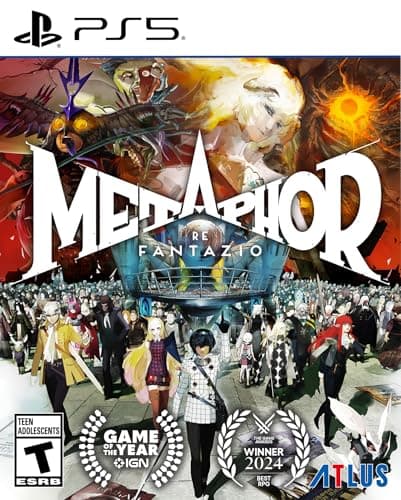
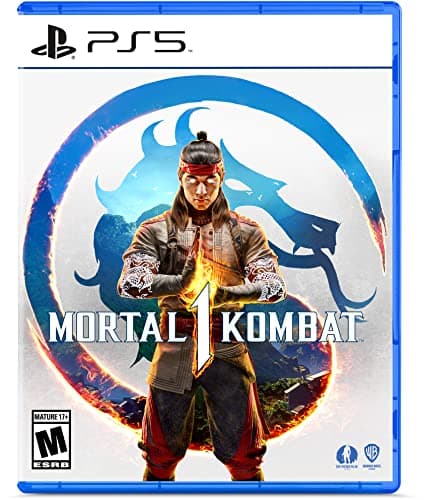
This is why reading them beats reading the letter. Two Mature games can be very different: PlayStation lists Mortal Kombat 1 with Blood and Gore, Intense Violence and Strong Language, while Metaphor: ReFantazio is rated Teen with Blood, Language, Mild Suggestive Themes, Use of Alcohol and Violence. Same genre of concern, very different intensity, and you only see that if you read past the letter.
Interactive Elements: the line that is not about content at all
The ESRB is explicit that Interactive Elements "do not influence the rating assignment of a product". They are flags about how the game behaves rather than what it depicts, and there are two you should look for.
In-Game Purchases— "Contains in-game offers to purchase digital goods or premiums with real world currency." The ESRB maintains a separate label for purchases that include random items. PlayStation lists In-Game Purchases on Mortal Kombat 1.
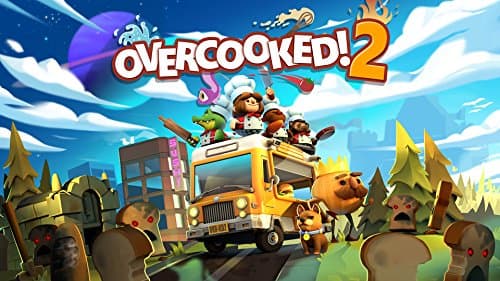
Users Interact— "Indicates possible exposure to unfiltered/uncensored user-generated content", covering user-to-user communication and media sharing. Nintendo's Overcooked! 2 listing carries this element even though the game itself is about cooking, because it has online play.
For a parent, those two lines often decide the purchase more than the age letter does. A gentle Everyone-rated game with open chat and a store attached can be a harder sell than a Teen-rated single-player game with neither. The four picks below are deliberately one per step of that ladder.
How to use ratings when you are actually buying
Read the descriptors before the letter
The letter answers "roughly what age". The descriptors answer "what specifically", and that is the question you actually have. If blood is fine in your household but strong language is not, or the other way round, the descriptors are the only part of the rating that helps you.
Check Interactive Elements if the console is shared
In-Game Purchases and Users Interact are the two features most likely to cause a problem after the purchase rather than during it. Both consoles let you restrict spending and communication at the account level, and doing that at setup is five minutes well spent - particularly if you are buying a console as a gift. Our cheap games for kids page sticks to games where neither flag applies.
Remember a rating is not a quality judgement
A Mature rating says nothing about whether a game is good, and an Everyone rating says nothing about whether an adult will enjoy it. Two of the best-value games on this entire site are family-rated, and two of the most acclaimed are rated Mature. Use the rating to decide suitability and use everything else to decide whether the game is worth the money.
Ratings differ by territory, so check the one on your box
ESRB is the North American system. An imported copy may carry PEGI or another regional rating with different thresholds, which is one more thing to check before buying from abroad — see are games region locked for the rest of the import checklist.
Where the ratings land on this site
It is worth knowing which shelves skew where. Our family shelves — LEGO games, games for kids, cozy games— sit at Everyone and Everyone 10+. Our horror, stealth and fighting game shelves are almost entirely Mature 17+, and we say so on each of those pages rather than letting a gift buyer find out at Christmas.