LEGO games are the closest thing family gaming has to a sure bet. The formula barely changes from one to the next — smash things, rebuild them, swap characters to solve a puzzle, collect studs — and it has been polished over so many games that even the older ones hold up. They are gentle enough for a young child, funny enough for the adult on the other controller, and designed from the start to be played by two people on one sofa.
They also fall in price more reliably than almost anything else on the shelf. Every LEGO game on this page has already dropped into the budget bracket, several of them into the range of the best games under $20. And unlike the cheap sports games or the cheap fighting games this site also ranks, a LEGO game does not depend on an online population or a server — even the one pick here with online co-op is a complete game on the couch. The disc you buy is the whole game, and it will still be the whole game in ten years.
So the question this page answers is not whether a cheap LEGO game is worth it — it almost always is — but which one fits your household. That mostly comes down to one thing the boxes do not make obvious: how many people can actually play at once. Each pick below states it plainly, alongside a live Amazon price, and lists the reasons not to buy it as clearly as the reasons to.
How to pick the right cheap LEGO game
Count the players first — it decides more than the license does
Nearly every LEGO game is a two-player couch co-op game, and that is the thing to check before the license. If your household has two players, every pick on this page works. If it has three or four, only one of them really does: LEGO Marvel Super Heroes 2 supports up to four players — but read the small print, because the four-player mode is its competitive Super Hero Battles arena. The story campaign itself is two-player co-op, like the others. A family of four taking turns is fine; a family of four expecting to play the story together is not.
Check whether you need online play
LEGO games are built around sitting on the same sofa, and most of them have no online co-op at all. The exception on this page is LEGO Horizon Adventures, which supports two players either on the couch or online. If the plan is to play with a grandparent in another city or a friend across town, that is the one to buy, whatever you think of the license.
Pick the license your kids already love
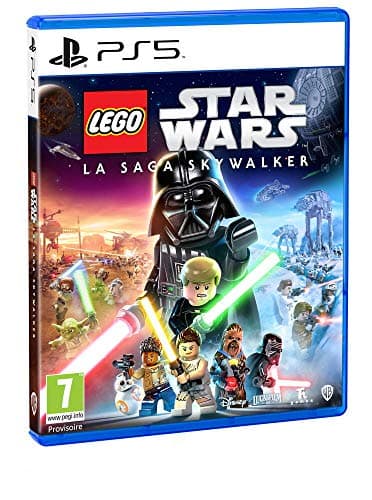
Once the player count is settled, the license is the whole decision, because the gameplay underneath is so similar from game to game. A child who loves Star Wars will happily play the Skywalker Saga for months; the same child may bounce straight off a Harry Potter game that is objectively just as good. Buy the world they already want to be in. The humor in each game is built on knowing the films, and it lands far better when they do.
Collections beat single games on value
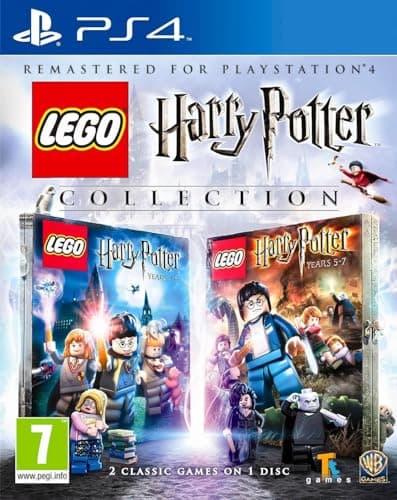
The LEGO Harry Potter Collection bundles two complete LEGO games — Years 1–4 and Years 5–7 — into one box for roughly what a single older LEGO game costs. That is the best content-per-dollar on this page. The trade-off is age: collections tend to bundle older games, and the menus and camera show it next to a newer release like the Skywalker Saga.
Newer LEGO games play better — up to a point
The formula has been refined across every release, so a newer LEGO game is usually more comfortable to play than an older one. That is the case for the Skywalker Saga over the older licenses. It is not a case for paying full price for the very newest one, because LEGO games fall so predictably that the newest release is always the worst value on the shelf. The sweet spot is one or two years old — which is where most of this page sits.
Buy the disc, and pass it on
LEGO games are aimed at children, and children grow out of them. That makes the disc the better buy than the download: it can be lent to a cousin, traded in, or resold once the household moves on, and an older disc is usually cheaper than the digital price to begin with. A PS4 disc also plays on a PS5, as long as the console has a disc drive. The full trade-off is in physical vs digital games, and the best times to buy are mapped in the game sale calendar. For more games two people can play together in the same room, see cheap games for two.
Every pick here sits at Everyone or Everyone 10+, and the descriptors are usually Cartoon Violence and Crude Humor. What do ESRB ratings mean explains what those labels do and do not promise.