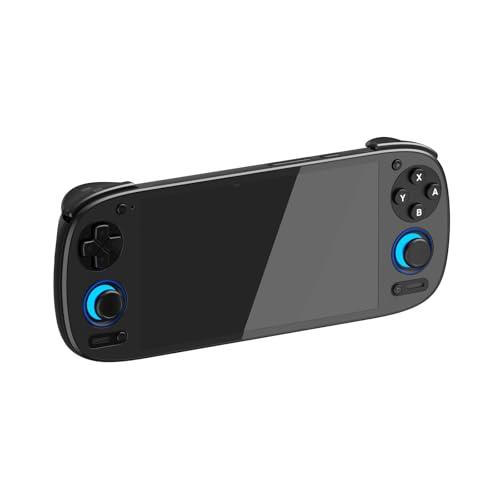
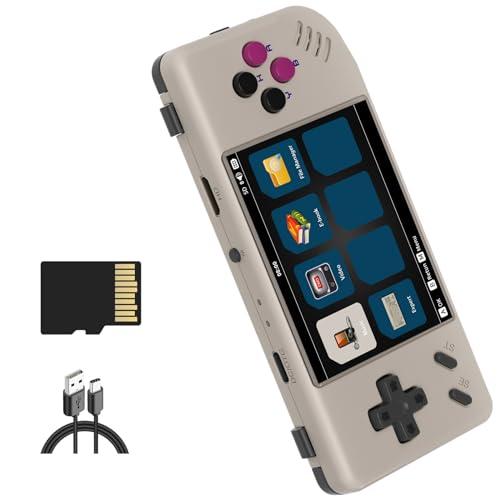
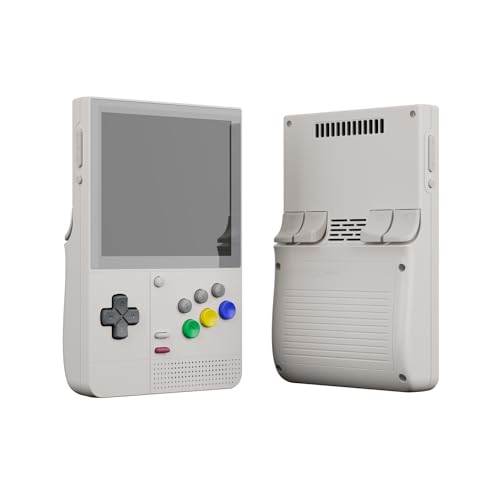
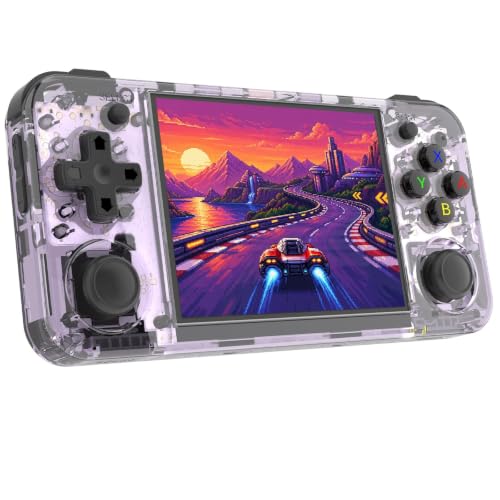
Buy the Anbernic RG35XX H. It is the best emulation handheld for almost everyone: a horizontal body with two analog sticks, a 3.5-inch 640x480 screen, HDMI out to a TV, and a price that sits under eighty dollars. It runs everything from the arcade era through the Game Boy Advance and the first PlayStation comfortably, which covers the overwhelming majority of what people mean when they say "classic games." If your budget is the hard constraint, the budget pick is the Anbernic RG28XX at well under fifty dollars — a genuinely tiny device with the same chip as its bigger siblings and a smaller screen. And if you want to reach the generations the cheap Linux machines cannot touch, the Retroid Pocket 5 is the Android device to spend the money on.
That is the whole answer. Everything below is the reasoning, the shelf sorted by price, and the honest warnings — because the single most common mistake in this category is buying the right device for the wrong library.
The two kinds of emulation handheld
Every device on this page falls into one of two camps, and the camps are further apart than the photographs suggest.
Linux handhelds (roughly $45 to $90)
These boot straight into a game menu. There is no app store, no browser worth using, no streaming. They ship with a card of preinstalled games and they are designed to be switched on and played. The chip inside the current generation — the Allwinner H700 in the Anbernic RG35XX family, and comparable parts in the Miyoo and Powkiddy devices — handles arcade, NES, SNES, Mega Drive, Game Boy, Game Boy Advance, and the first PlayStation. It does not handle GameCube, it does not handle PlayStation 2, and anything that promises otherwise at this price is overselling.
For most buyers this is the correct purchase, and it is not close. The games most people are nostalgic for are 2D games, 2D games look superb on a 640x480 screen, and the battery life on these devices is measured in hours rather than minutes.
Android handhelds (roughly $145 to $310)
These are phones in a controller body. They run the Play Store, they stream, they take whichever emulator you prefer rather than whichever one the manufacturer shipped, and their chips reach the generations the Linux devices cannot. They also cost two to four times as much, and they ask more of you: Android emulation means choosing emulators, configuring them, and accepting that some things will need tuning. If that sounds like a hobby rather than a chore, this is your tier. If it sounds like homework, buy a Linux handheld and enjoy your evening.
Which to buy, pick by pick
- Anbernic RG35XX H— for the person who wants one device that does the classics properly and plugs into a TV. The default answer.
- Retroid Pocket 5— for the enthusiast who has outgrown a Linux handheld and wants a 1080p screen and real horsepower.
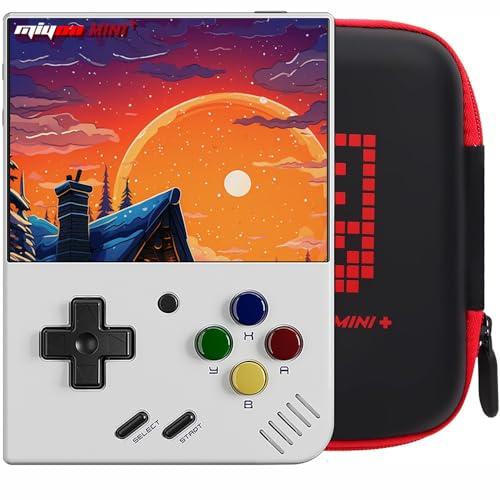
- Miyoo Mini Plus— for the person who wants the smallest good handheld and does not mind flashing community firmware to get the best from it.
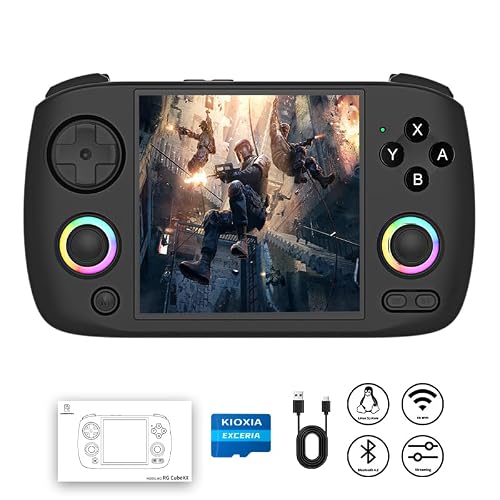
- Anbernic RG CubeXX— for the arcade and Game Boy player, whose libraries are nearly square and fill a square screen instead of letterboxing on a widescreen one.
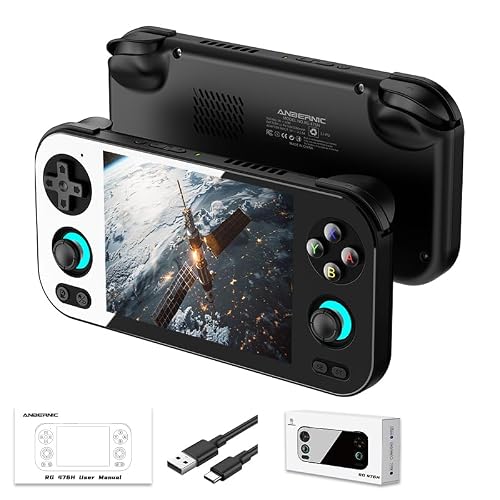
- Anbernic RG476H— for the buyer who wants Android without Retroid's price, in a 4.7-inch body.
- Anbernic RG28XX— for the smallest budget and the coat pocket. The cheapest honest device here.
- Retroid Pocket Classic— for the person who wants an OLED screen in a vertical Game Boy shape, with Android underneath.
What your money actually buys as you go up
The price ladder in this category is unusually honest, which is rare enough to be worth saying. Under fifty dollars you get a small screen and the same processor as the tier above. Around seventy-five to ninety you get a bigger screen, a better body, analog sticks and video output. From there the next real step is not a better Linux handheld — it is Android, and that step costs well over a hundred dollars more. There is very little between $95 and $145 worth buying, because that gap is where devices try to charge Android money for Linux silicon.
The corollary is that upgrading within the Linux tier is mostly a matter of taste: screen size, screen shape, whether it folds, whether it has sticks. A full look at the RG35XX H covers that tier in detail, and our best retro handheld list ranks the Linux devices against each other without the Android distraction.
The thing nobody tells you: get a controller
Most of these handhelds output to a television, over HDMI on the Anbernics or via a dock on the Android devices. The moment you do that, you need a pad — and the correct pad for a library of Super Nintendo and Mega Drive games is a retro-shaped one, not a modern twin-stick controller. The budget controllers we already rank cover the general case; for this specific job the 8BitDo SN30 Pro is the right shape, and the 8BitDo Ultimate 2 vs 2C comparison covers the twin-stick option if you are playing newer things too.
The legal part, stated plainly
These devices are sold with storage cards of preinstalled games. We rank hardware: the screen, the chip, the body, the battery and the price. What any individual seller loads onto a card is between that seller and the rights holders, it changes without notice between listings, and it is not something we can verify or endorse. Every device here is also perfectly usable with content you own or that is distributed freely by its creators — the homebrew scene for these machines is large and legitimate — and that is the use we are recommending them for.
How we ranked these
We did not take these devices apart, run benchmarks on them or award them anything. What we did is the thing the big review sites skip: resolve every model to a live Amazon listing, confirm it is actually in stock, read the specification the seller publishes, and then sort the shelf by what the device physically is and what it costs today. Prices on this page come from the Amazon Product API and carry the date they were read; where we have no verified live price the button says "Check price" instead of showing you a number that has rotted. Our how we pick page sets out the full method, and editorial policy covers the rest.
One rule shapes every list in this wave: a handheld is only a good buy if it runs the era you actually want to play. Nearly every unhappy purchase in this category is somebody buying a $77 Linux handheld expecting GameCube, or a $220 Android handheld to play Game Boy. The screens all look the same in photographs; the chips do not.