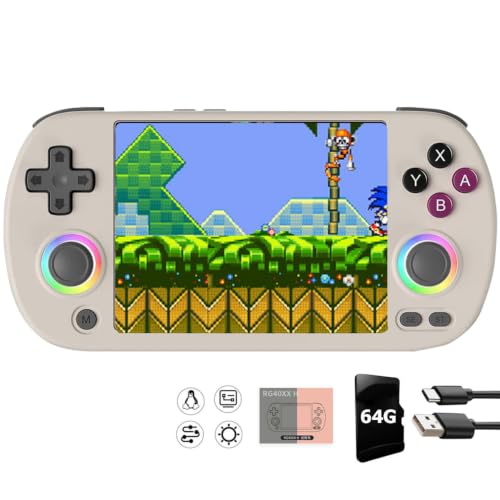
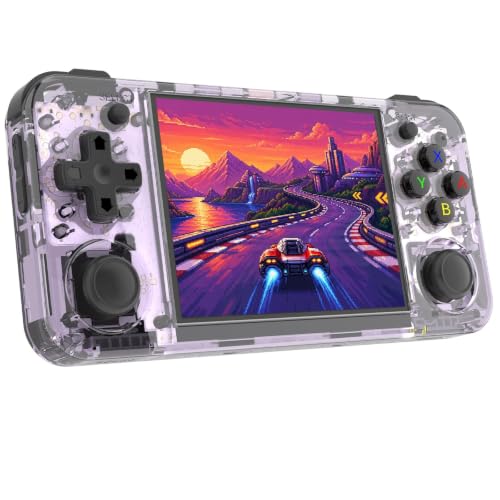
Buy the Anbernic RG35XX H. For under eighty dollars it gives you a horizontal body you can hold for an hour, two analog sticks, a 3.5-inch 640x480 IPS screen, HDMI output to a television and a battery measured in hours — and it runs everything from arcade boards through the Game Boy Advance and the first PlayStation without drama. It is the right first handheld for almost anyone, and it is the device the rest of this category gets measured against. If it is more than you want to spend, the budget pick is the Anbernic RG28XX at under fifty dollars: the same H700 processor behind a smaller 2.83-inch screen.
What follows is the honest version — what it does, where the ceiling is, and which of its siblings is a better fit if your hands, your bag or your library are different from the average.
What it is
The RG35XX H is the horizontal member of Anbernic's RG35XX family. The "H" is for horizontal: grips on either side of the screen in the modern console shape, rather than the vertical Game Boy layout of the RG35XX+ and the Miyoo Mini Plus. That shape is why it has two analog sticks, which the vertical devices in this price bracket do not, and it is why it is comfortable over a long session.
The published specification is a 3.5-inch 640x480 IPS OCA screen, the Allwinner H700 processor, a Linux system, a 64GB card of preloaded classic games, Wi-Fi, Bluetooth and HDMI output. The battery is quoted at up to eight hours in the Anbernic listings. We report those numbers as the manufacturer publishes them; we have not run a stopwatch on one, and we are not going to invent a figure that sounds more authoritative.
What it runs, honestly
Comfortably: arcade, NES, SNES, Mega Drive / Genesis, Game Boy, Game Boy Color, Game Boy Advance, Neo Geo, PC Engine, and PlayStation 1. That is the heart of the retro library and it covers the overwhelming majority of what people buy one of these for.
Variably: Nintendo 64, Dreamcast and PSP. Some titles run well, some do not, and the difference is per-game rather than per-system. Anyone who tells you a device in this bracket "does N64" without qualification is selling something.
Not at all: GameCube, PlayStation 2, and anything newer. This is a hardware limit, not a firmware one — no update is coming that changes it. If those generations are what you want, you need an Android handheld at two to three times the price, and our Android handheld list covers that tier.
The HDMI output is the underrated feature
It is easy to read "HDMI out" on a spec sheet and move on, but on a device this cheap it changes what the thing is. Plug it into a television, pair a Bluetooth controller, and the handheld becomes a tiny retro console for the living room. For a library of SNES and Mega Drive games the correct pad for that job is a retro-shaped one — the 8BitDo SN30 Pro is the obvious choice, and our budget controllers list covers the alternatives. If you are also playing newer things, the 8BitDo Ultimate 2 vs 2C comparison is the one to read.
Who should buy something else instead
- Want a bigger screen? The Anbernic RG40XX H is the same device with a 4-inch panel and a larger battery, for about ten dollars more. It is meaningfully better for Game Boy Advance text and meaningfully worse at being carried.
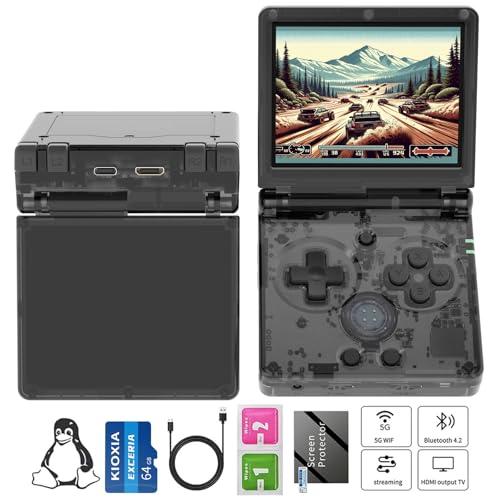
- Carrying it in a bag with keys? The Anbernic RG35XX SP folds shut and protects its own screen. You give up the analog sticks.
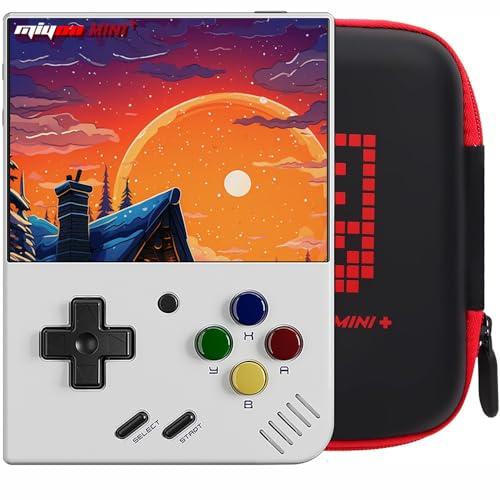
- Want the smallest good device? The Miyoo Mini Plus is the enthusiast's pocket handheld, with the strongest community firmware scene in the category — if you are willing to flash it.
- Want it cheaper? The Anbernic RG28XX runs the same chip at under fifty dollars on a 2.83-inch screen.
Buying notes
The RG35XX H is sold under several listings, in several colours, with different card capacities and from different sellers, and the prices vary by ten dollars or more for what is the same device. The pick on this page is tied to a specific listing we resolved and confirmed in stock on 21 November 2026, and the price shown is the live price for that listing — but glance at the colour and the card size before you order, because the listings are not consistent.
You do not need to buy a card. It ships with one, and whole console generations of 2D games occupy a few gigabytes. The upsell to a larger card is worth it only if you intend to load PlayStation 1 discs in bulk, which are large by comparison.
Is it worth it?
Yes, with one condition: that you want the era it runs. At under eighty dollars it costs about what five cheap console games cost, and unlike five games it is still something you own and use in three years. The failure mode is not quality — it is buying it for a library it cannot play. Read the "what it runs" section above twice, decide whether the list includes what you are nostalgic for, and if it does, this is the purchase.
How we ranked these
We did not take these devices apart, run benchmarks on them or award them anything. What we did is the thing the big review sites skip: resolve every model to a live Amazon listing, confirm it is actually in stock, read the specification the seller publishes, and then sort the shelf by what the device physically is and what it costs today. Prices on this page come from the Amazon Product API and carry the date they were read; where we have no verified live price the button says "Check price" instead of showing you a number that has rotted. Our how we pick page sets out the full method, and editorial policy covers the rest.
One rule shapes every list in this wave: a handheld is only a good buy if it runs the era you actually want to play. Nearly every unhappy purchase in this category is somebody buying a $77 Linux handheld expecting GameCube, or a $220 Android handheld to play Game Boy. The screens all look the same in photographs; the chips do not.