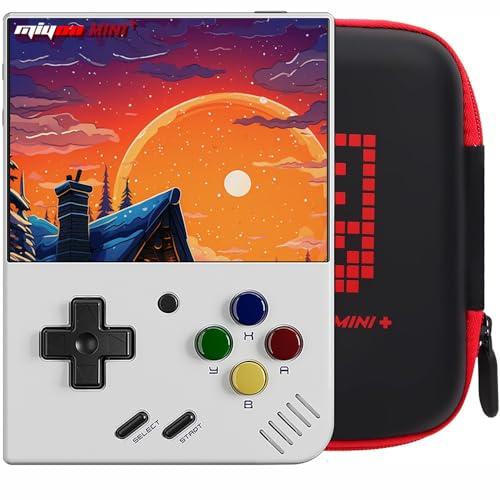
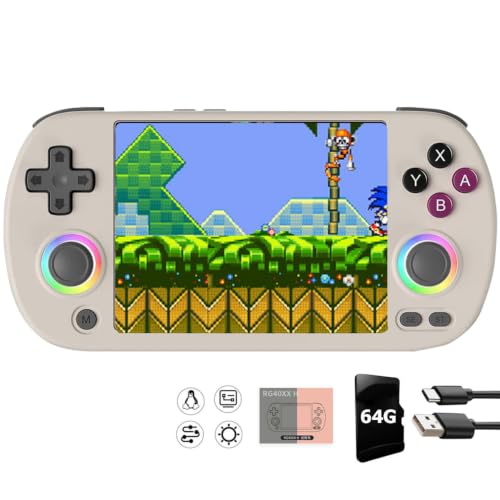
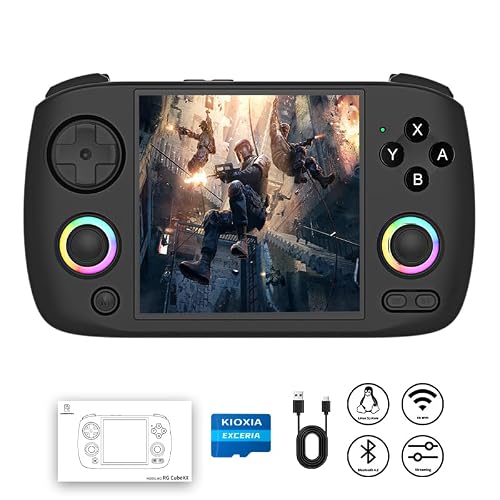
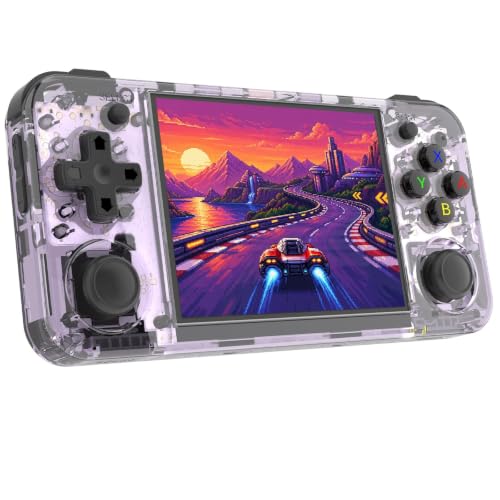
Buy the Anbernic RG35XX H. Among retro handhelds under a hundred dollars it is the one with the fewest compromises: a horizontal grip that is comfortable for an hour, two analog sticks, a 3.5-inch 640x480 screen, HDMI output and a battery that outlasts a long flight. It is the right device for the person who wants a retro handheld and has not yet developed opinions about retro handhelds. The budget pick is the Anbernic RG28XX at under fifty dollars — same processor, smaller 2.83-inch screen, small enough to live in a coat pocket permanently. If you want the enthusiast's choice instead, the Miyoo Mini Plus is the prettiest small device here and has the best community firmware scene in the category.
Everything on this list is a Linux handheld in the $45–$90 bracket. They all play the same era of games. What separates them is physical: how big the screen is, what shape it is, whether the device folds, and whether it has analog sticks. Sort those four and you have made your decision.
The four questions that decide it
1. Horizontal or vertical?
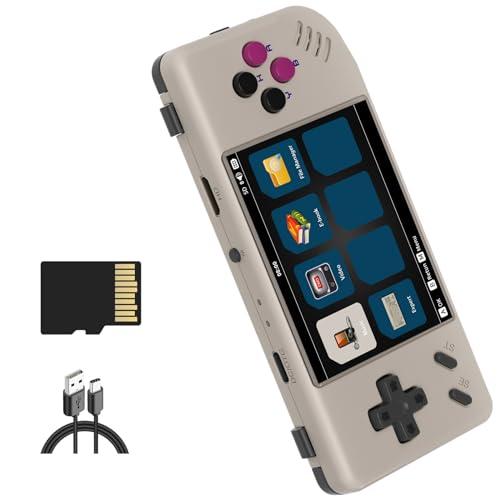
A vertical handheld is the Game Boy shape: screen on top, controls below. It is smaller, more pocketable, and correct for Game Boy, NES and arcade libraries. A horizontal handheld is the modern shape: screen in the middle, grips either side. It is more comfortable for long sessions and it is the only shape that comes with analog sticks, which you need for PlayStation 1 and anything later. The RG35XX H and RG40XX H are horizontal; the Miyoo Mini Plus and RG35XX+ are vertical.
2. Do you need analog sticks?
If your list of games is Super Mario World, Sonic, Street Fighter, Castlevania and Pokemon, you do not. If it includes Crash Bandicoot, Spyro, Metal Gear Solid or anything on the Nintendo 64, you do. This question alone eliminates half the shelf for most buyers, and it is the one people most often answer after they have already bought.
3. Does it need to fold?
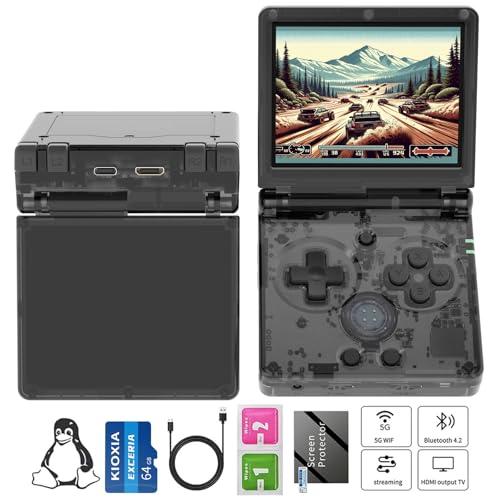
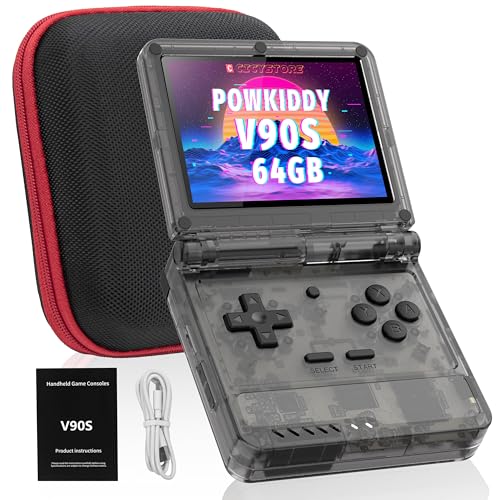
A clamshell protects its own screen, which matters if the device lives in a bag with keys in it. The Anbernic RG35XX SP is the Game Boy Advance SP in modern form and is the nicest-feeling device on this list; the Powkiddy V90S is the cheap way to get the same idea. The cost is a hinge, which is the part most likely to fail, and the absence of sticks.
4. How big a screen do you actually want?
The 2.83-inch RG28XX is tiny and cheap. The 3.5-inch panel on the RG35XX H, Miyoo Mini Plus and RG35XX SP is the category standard and is genuinely fine. The 4-inch RG40XX H is noticeably better for Game Boy Advance text and PlayStation 1 detail and noticeably worse at being carried. The RG CubeXX's 3.95-inch square panel is a specialist choice that is the best screen here for arcade and Game Boy and the worst for widescreen.
Who each pick is for
- Anbernic RG35XX H — the all-rounder. Buy this unless you have a reason not to.
- Miyoo Mini Plus — the enthusiast's pocket device, if you will flash firmware.
- Anbernic RG40XX H — the same device as the 35XX H with a bigger screen and battery.
- Anbernic RG35XX SP — the clamshell, for bag life and for the nostalgia.
- Anbernic RG28XX — the cheapest honest handheld, and the one you will actually carry.
- Anbernic RG CubeXX — the square screen, for arcade and Game Boy libraries.
- Powkiddy V90S — the cheap clamshell, with two card slots.
What none of these will do
No device on this page runs GameCube, PlayStation 2 or anything newer, and no firmware update will change that — it is a silicon limit, not a software one. None of them runs Android apps, so there is no Netflix, no browser worth the name and no cloud gaming. None of them has a cellular connection. Several have Wi-Fi, which is used mainly for transferring files and for local multiplayer, not for downloading anything useful.
If any of that is a dealbreaker you are shopping in the wrong tier, and the honest answer is to read our best Android gaming handheld list instead and budget two to three times as much. There is no device that does both jobs at this price, and anything advertised as doing so is lying about one of them.
Buying notes
Listings in this category are chaotic. The same model is sold under several listings with different colours, different card sizes and different sellers, and the prices between them can differ by ten or fifteen dollars for an identical device. Every pick on this page is tied to a specific listing we resolved and confirmed in stock, and the price next to it is the live price for that listing — but it is worth clicking through and glancing at the colour and card capacity before you order, because they are not consistent across the shelf.
A second buying note that saves money: almost all of these ship with a storage card already in them. You do not need to buy a second one on day one, and the upsell to a 256GB card is rarely worth it for a 2D library, where whole console generations fit in a few gigabytes.
How we ranked these
We did not take these devices apart, run benchmarks on them or award them anything. What we did is the thing the big review sites skip: resolve every model to a live Amazon listing, confirm it is actually in stock, read the specification the seller publishes, and then sort the shelf by what the device physically is and what it costs today. Prices on this page come from the Amazon Product API and carry the date they were read; where we have no verified live price the button says "Check price" instead of showing you a number that has rotted. Our how we pick page sets out the full method, and editorial policy covers the rest.
One rule shapes every list in this wave: a handheld is only a good buy if it runs the era you actually want to play. Nearly every unhappy purchase in this category is somebody buying a $77 Linux handheld expecting GameCube, or a $220 Android handheld to play Game Boy. The screens all look the same in photographs; the chips do not.