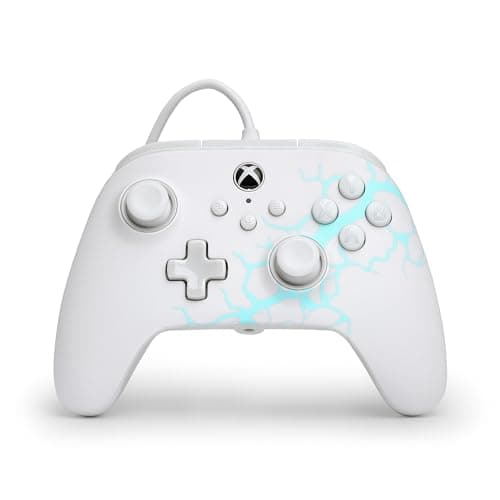
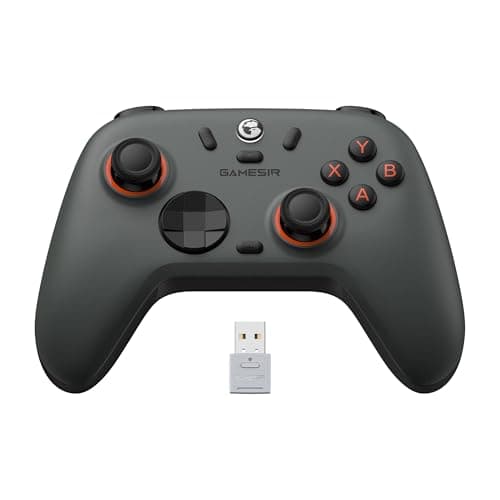
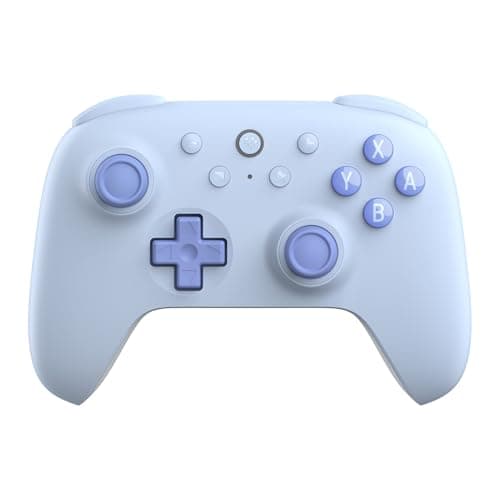
Stick drift is physical wear, not a bug. Most analogue sticks work by dragging a contact across a resistive strip; the strip wears, debris gets in, and the controller starts reading movement that your thumb is not making. Nothing you install fixes that, which is why drift is the most common reason a perfectly good pad gets thrown away. The one thing that genuinely prevents it is a different stick design — Hall-effect sticks, which read position with magnets and have nothing touching to wear out.
That matters to a budget buyer more than to anyone else, because drift-proof sticks have arrived at the bottom of the market faster than at the top. All three pads above include them, and all three cost a fraction of a first-party controller. If you are replacing a drifty pad right now, the useful move is not to buy the same design again.
The mechanism, briefly
A conventional stick sits on two potentiometers — one for each axis. Each is a track with a wiper that physically slides along it, and the console reads the resistance to work out where the stick is. Two things go wrong over time. The track wears where the wiper spends most of its life, which is the centre, so the resting position stops reading as zero. And dust, skin and whatever else lives on a coffee table works its way in, which makes the reading noisy as well as off-centre.
The result is a stick that reports input at rest. Software hides it for a while — every console applies a small deadzone around centre and recalibrates — until the error grows past what the deadzone can absorb. That is why drift feels like it appears suddenly: it has been developing for months, and you only meet it on the day it outgrows the fudge factor.
How a Hall-effect stick is different
A Hall-effect stick puts a magnet on the stick and a sensor underneath it, and measures the magnetic field instead of a resistance. Nothing slides along anything. There is no track to wear a notch into and much less for debris to interfere with, so the centre keeps reading as centre. It is not magic — a stick can still be damaged, and the rest of the pad still wears normally — but the specific failure that kills most controllers does not start.
The honest caveat: nobody publishes a lifespan figure for either design that is worth repeating, and we are not going to invent one. What we will say is that the design difference is real, mechanical and easy to understand, and that it costs essentially nothing extra at this price. When two cheap pads are close, take the Hall-effect one. That is the whole recommendation, and it is why every pick above has them.
Is it actually drift? Three checks first
Plenty of "drift" turns out to be something cheaper to fix. Work through these before you buy anything.
1. Test it outside the game
Every console and Windows has a controller test or calibration screen that shows raw stick position. Rest your hands off the pad entirely and watch it. If the indicator sits off-centre or wanders with nothing touching it, that is drift. If it sits dead centre but your character still creeps in one game, the problem is that game's settings, not your hardware.
2. Rule out the obvious interference
A dirty stick gate, something lodged under the rim, a thumb grip that has slipped, or a low-battery wireless pad behaving oddly all produce drift-like symptoms. Clean around the stick base gently, remove any add-ons, and try a fresh charge or a cable. Recalibrating in the console's settings is free and sometimes buys you months.
3. Check the game's own deadzone setting
Many games expose a stick deadzone slider. Raising it slightly is the standard way to live with a mildly drifting pad, and it is also how to confirm the diagnosis: if a bigger deadzone makes the problem vanish, the stick is reading off-centre. Note what this costs you — a larger deadzone means less fine control near centre, which you will feel in aiming.
What you can do once drift has started
In order of how much we would recommend them. Recalibrate first, because it is free. Increase the in-game deadzone second, accepting the loss of precision. Third, if the pad is still in warranty, claim it — drift within a warranty period is exactly what a warranty is for, and manufacturers do replace pads for it. Opening the controller to clean or replace the stick module yourself is a real option and a real way to void your warranty and break something else; we would only reach for it on a pad that is already out of support and otherwise destined for a drawer.
What does not work: a firmware update will not restore a worn track, and no software setting removes the underlying error — it only hides a bigger slice of the stick's range.
How to avoid it on your next controller
Buy Hall-effect. It is stated plainly on the listings of the pads that have it, it is now available for well under thirty dollars, and it removes the failure mode rather than delaying it. Beyond that, the ordinary care advice applies and is worth about what it sounds like: store the pad somewhere it will not collect dust, do not eat over it, and keep thumb grips clean if you use them.
The thing not to do is treat drift as a reason to spend more money in general. Price and drift-resistance are not the same axis — several expensive pads still use conventional sticks, and several cheap ones do not. If you want the ranked options, they are on best budget controllers, and the two cheapest drift-proof wireless pads are compared directly in 8BitDo Ultimate 2C vs GameSir Nova Lite.