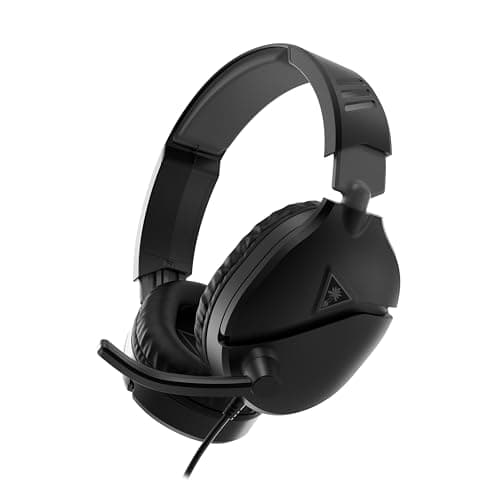
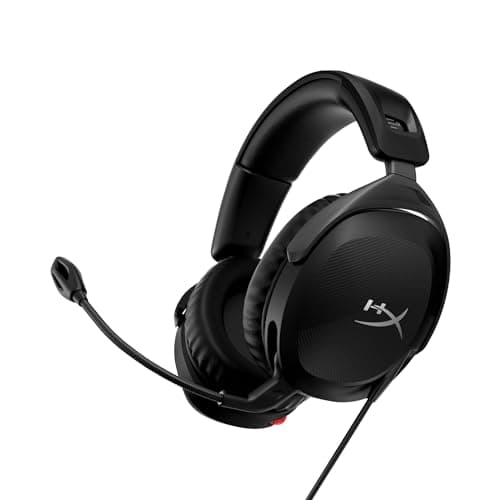
Buy wired, unless you have a specific reason not to. Every headset costs something to build, and in a wireless model a chunk of that budget goes into a radio, a battery and the charging circuitry rather than into drivers, padding and a microphone. At a hundred and fifty dollars there is enough budget for both. At thirty dollars there is not, which is why the cheap headsets worth owning are overwhelmingly wired — and why both picks above are.
That is a verdict about budget headsets specifically, not a claim that wireless is bad. Wireless genuinely wins for some people, and the section below says exactly who they are. But if your budget is around thirty dollars and you are weighing a wired headset against a wireless one at the same price, the wired one is almost always the better object.
Our two picks are the ones we can actually stand behind: the HyperX Cloud Stinger 2 as the default cheap headset, and the Turtle Beach Recon 70 as the floor — about as little as you can spend and still get something worth wearing. We do not have a verified cheap wireless pick, and rather than invent one we will tell you plainly that the gap is there.
What wired gets you at this price
More headset per dollar
The whole argument in one line. Remove the radio, the battery and the charging hardware, and the same manufacturing budget goes into things you can hear and feel. That is why a thirty-dollar wired headset can sound surprisingly good while a thirty-dollar wireless one usually sounds like a thirty-dollar headset that also has a radio in it.
Nothing to charge, ever
A wired headset cannot go flat. There is no battery to degrade after two years, no charging cable to lose, and no session that ends because you forgot to dock it. For a product you put on your head and forget about, that is worth more than it sounds.
It works on almost anything with a jack
A 3.5mm headset plugs into controllers, handhelds, laptops, phones with an adapter and the back of a desktop. The Recon 70 in particular is useful for precisely this reason — it will follow you between devices with no pairing step at all. Wireless headsets are typically tied to a specific dongle or a specific platform's wireless standard, and the one you bought for a console may not work with your PC.
No latency question to think about
Good wireless gaming headsets handle audio latency well; cheap ones are a lottery, and Bluetooth in particular is not designed around it. A cable removes the entire question. This matters most in competitive play and in rhythm games, and matters not at all in a farming sim.
Where wireless genuinely wins
You move around while you play or listen
The real benefit of wireless is not the absence of a cable, it is the freedom to stand up. If you take voice calls while gaming, get up constantly, or play from a sofa with the console across the room, a cable is a daily annoyance rather than a theoretical one. That is a legitimate reason to pay the premium.
Your setup punishes cables
A desk with a tower under it, a TV setup with the console in a cabinet, or a controller whose jack is awkward to reach all make a cable worse than it sounds on paper. Headset cables are also the most commonly destroyed part of a cheap headset, usually by a chair wheel.
You are above the budget tier anyway
If you are spending well over a hundred dollars, the trade-off in this page largely dissolves — there is room in that budget for a good radio and good drivers. The argument for wired is a budget argument, and it gets weaker as the budget rises. What we would not do is stretch to a cheap wireless model to get the feature: that is paying for the radio with the sound.
How to choose, in one pass
- Set the budget first. Around thirty dollars means wired, full stop.
- Check the connection your device actually has. A 3.5mm jack is the most universal; some PC setups split microphone and headphone inputs and need an adapter or a USB connection. Check before ordering.
- Decide whether you stand up. If you genuinely roam, budget for wireless properly rather than buying the cheapest wireless thing.
- Prioritise comfort over spec sheets. A headset you wear for three hours is judged on clamp and padding long before it is judged on frequency response.
The honest gap in our own list
We do not currently have a cheap wireless headset we are willing to recommend by name, and we would rather say that than fill the slot. Everything we verify has to clear the same bar — a real product page, a real listing, and a price we can show live — and nothing wireless in this price band has cleared it. If you need wireless and cannot stretch the budget, the honest advice is to buy the cheap wired headset now and save for a good wireless one later, rather than buying a cheap wireless one twice.
For the ranked version of the wired options, see best cheap gaming headsets, and for the direct head-to-head between the two picks above, Cloud Stinger 2 vs Recon 70. The same wired-versus-wireless question for controllers — where the answer comes out differently — is in wired vs wireless controllers.