Every game on a budget shelf costs about the same. What differs, wildly, is how much game is inside. One box in the twenty-dollar bracket holds a six-hour campaign. The box next to it holds three complete remastered games and every single-player add-on their publisher ever sold. Both are priced like a cheap game. Only one of them is one.
That gap is the whole reason this page exists. This site ranks games on value-per-dollar, and collections and complete editions are where the arithmetic gets silly: a publisher bundles everything it once sold piecemeal, the bundle ages into the back catalog like any other disc, and you end up buying four or five purchases for the price of one. It is the single most reliable trick in budget gaming, and it is almost never the thing a store page puts in front of you.
The ranking below is not a quality ranking. Several of these games appear on our genre lists — cheap shooters, cheap fighting games, cheap JRPGs— where they are judged against their peers. Here they are judged on one axis only: how many finished games, and how much paid add-on content, you get in one purchase, relative to what it costs. That is why a seven-game arcade box sits alongside an open-world RPG and a LEGO double-pack, and why the most famous game on the page is not in the list at all — it is the skip.
Four things decide the order, in this priority. First, how many complete, separately released games are in the box — a second campaign is the one kind of content that cannot be padded. Second, how much genuinely paid add-on content is folded in, checked against the publisher's own listing rather than the back of the case. Third, how much of the total is playable offline and permanently yours, because a bundled online mode on an older game is a service, not an asset. Fourth, and only fourth, how good the games are — every pick here had to be something we would recommend on its own before it earned a place for its contents. A box full of games nobody should play is not a bargain at any price, which is why the bargain-bin multipacks that technically hold a long list of games are nowhere on this list.
Every box below is a physical disc with a live price, and every claim about what is inside it is sourced to the publisher, not to memory: 2K for BioShock, Capcom for Resident Evil 7 and Marvel vs. Capcom, the PlayStation Store listing for Mortal Kombat 11 Ultimate, LEGO Harry Potter and Final Fantasy X/X-2, PlayStation.Blog for Horizon. The sources are listed at the foot of the page. Everything here sat under $30 when we built the list; the prices on the cards are live, so check them rather than trusting this sentence.
How to judge a game collection
Count finished games first, everything else second
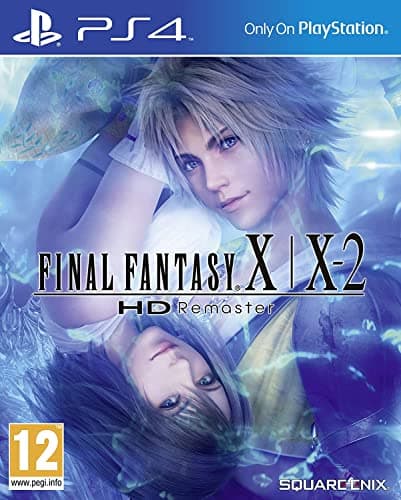
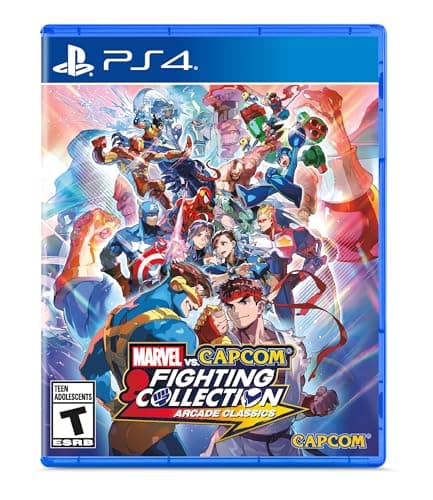
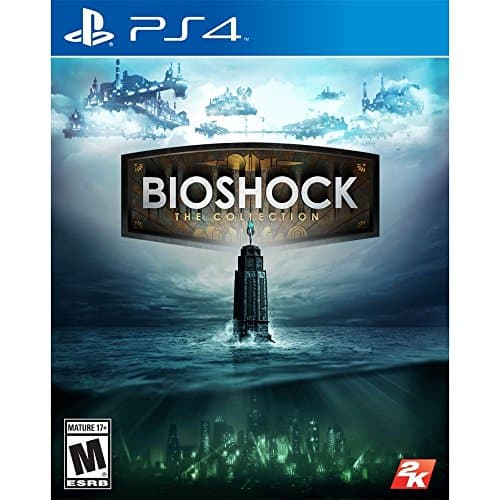
The strongest form of this deal is the box with more than one complete game in it, because a second game cannot be padded. BioShock: The Collection is three remastered campaigns — BioShock, BioShock 2 and BioShock Infinite — plus, in 2K's own words, "all single-player content" and "all single-player add-on content," which is where Minerva's Den and both episodes of Burial at Sea live. LEGO Harry Potter Collection is Years 1–4 and Years 5–7 in one purchase, Final Fantasy X/X-2 HD Remaster is two full role-playing games on one disc, and Marvel vs. Capcom Fighting Collection: Arcade Classics is seven arcade titles, from X-Men: Children of the Atom through Marvel vs. Capcom 2. Those four are the safest buys on the page for one reason: you can count what you are getting without trusting anyone's marketing copy.
An "all the DLC" edition is worth more than it sounds
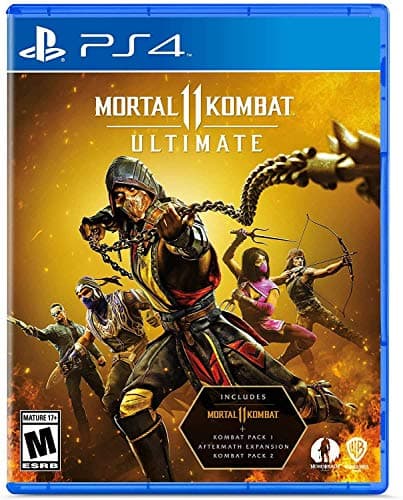
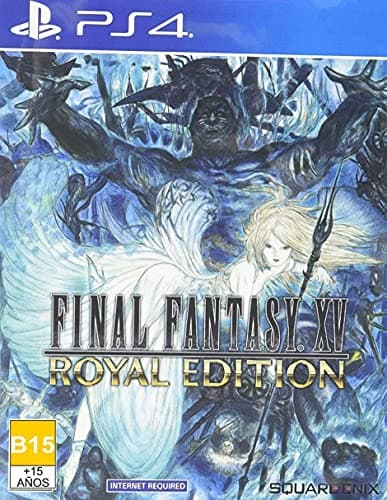
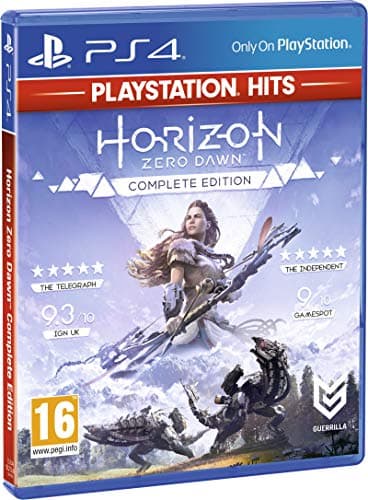
The second form is a single game with every paid add-on folded in, and budget buyers routinely undervalue it because the box looks like one game. Mortal Kombat 11 Ultimate is listed by the PlayStation Store as the base game plus Kombat Pack 1, Kombat Pack 2, the Aftermath expansion and Shao Kahn — four separate things people once paid for individually. Final Fantasy XV Royal Edition folds in the season-pass episodes and the Royal Pack additions. Horizon Zero Dawn: Complete Edition adds The Frozen Wilds, which PlayStation.Blog describes as "a sizeable chunk of content," to a game that was already large. The test is simple: if the add-ons are still sold separately on the store, price them up and compare. The complete box almost always wins, and on a back-catalog disc it usually wins by a lot.
Check what the premium edition actually adds that is not free
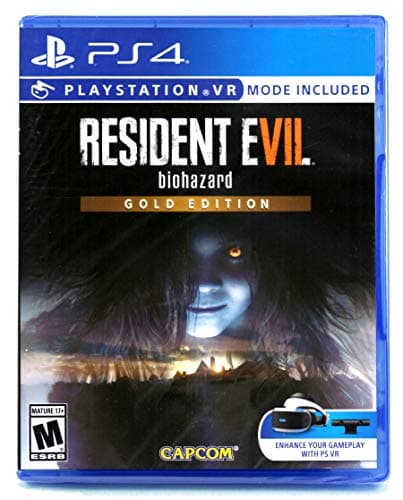
Not every extra in an expensive box was ever for sale. Resident Evil 7 biohazard: Gold Edition is a good example of doing this properly and a good example of the trap. Capcom's announcement describes it as the game plus "both previously released 'Banned Footage' add-on content packs, plus the third add-on pack, 'End of Zoe.'" Those three are real, paid content. The fourth thing people assume they are buying — Not a Hero — was released free to every owner of the standard game, Gold or not. The Gold box is still the better buy, but for three reasons rather than four. Do this arithmetic before you pay the premium, and read the skip pick on this page, which is the case where the arithmetic comes out at zero.
Know what is on the disc and what is a download
A collection is only a physical bargain if the content is physically there. Some "complete" boxes ship a disc and a voucher, and some publishers move content out of the box entirely once the game is old — which is exactly what happened to The Witcher 3's expansions. Where the distinction matters on this page, the card says so. It also matters for resale: a disc holds its second-hand value, a download code that has already been redeemed holds none. The broader case for discs over codes is in physical vs digital games, and the PlayStation-specific version is in physical vs digital PS5 games.
The online half of an old box is the part that can disappear
Collections skew old, and the older the box, the more of it depends on someone else keeping a server on. The single-player content on a disc is yours permanently; an online mode is a service with no guaranteed end date published for it. Two picks here are explicit about that. Marvel vs. Capcom Fighting Collection runs its seven games with rollback netcode across ranked, casual, lobby and spectator play — genuinely good online for 1990s arcade games — but it is online play, with a PS Plus requirement attached, and populations for niche fighters thin out. Final Fantasy XV Royal Edition includes the Comrades multiplayer expansion, and we do not make promises about the online half of a 2018 game. Buy any of these for the offline content and treat online as a bonus. The same logic drives our cheap sports games page, where the expiry dates are actually published.
Age is the hidden cost, and no amount of content fixes it
A collection exists because a series stopped being new, so every box on this page is buying you quantity out of the past. That is usually a fine trade — a 2013 campaign does not get worse — but it is a trade, and it lands in specific places. The first BioShock's shooting feels dated next to anything made since; Final Fantasy X/X-2 is a remaster of two PlayStation 2 games, with fixed cameras and menus to match; the LEGO Harry Potter games are the oldest design on the page and their camera shows it. What you will not find in any of them is a battle pass, a launch-day patch you need, or a roadmap you are being asked to believe in. If you want the newest thing, none of these is it, and the honest place to go is a price-cap list like the best games under $30. If you want the most finished game per dollar, age is the reason this page can offer it.
One box, more than one rating
Bundling hides the content warnings. Several picks here are adult games: BioShock is built around body horror and a ruined city, Mortal Kombat 11's gore is extreme even by its own series' standards, and Resident Evil 7 is a first-person horror game that a lot of people cannot finish. Two are not: LEGO Harry Potter is a family game with couch co-op for two, and Final Fantasy X/X-2 is rated T. The collections format makes this easy to get wrong, because a three-game box reads as generous rather than as seventeen-plus. If you are buying for someone else, check the rating on the specific box rather than the size of it — the same warning we put on cheap games for kids, where the picks are chosen for the audience first.
Collections fall later, and further, than the games in them
The deal cycle works differently here. A publisher assembles a collection when a series is finished selling at full price, which means the box starts life in a discount-friendly part of the catalog and keeps drifting down as stock clears. There is no launch window to wait out and no season to be locked out of — the content is complete on day one. In practice that means collections are the category where a patient buyer is most reliably rewarded, and where the seasonal store sales do most of the work. The schedule is in when do games go on sale and the game sale calendar; the PlayStation-specific tactics are in how to buy PS5 games cheap. If you want the same idea applied to a price cap instead of a box type, start with the best PlayStation games under $30.